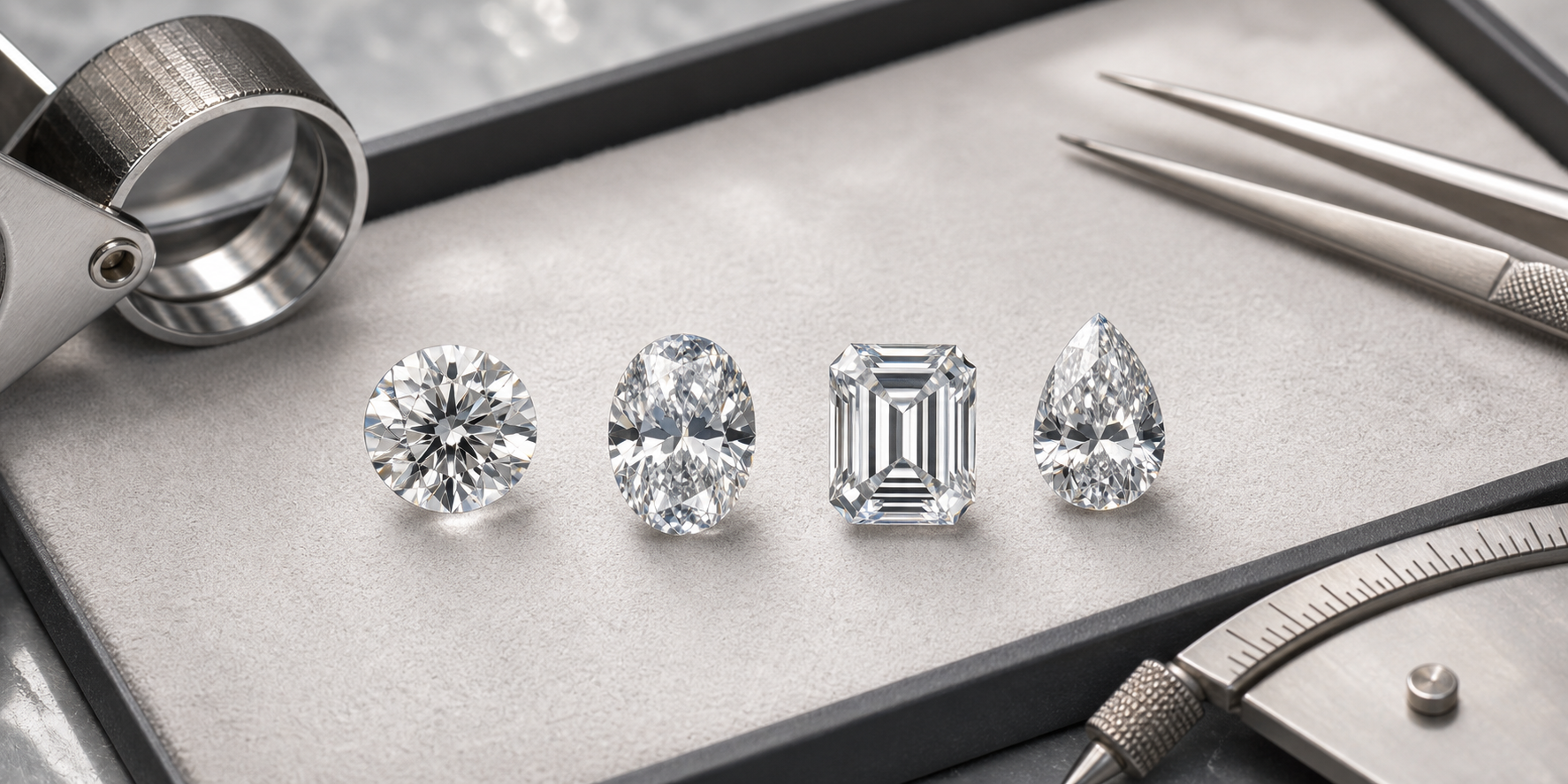
Diamond shape is often the first decision clients make because it changes the entire personality of a ring. Shape affects outline, finger coverage, facet behavior, and how classic, dramatic, or modern the final design feels.
There is no universal best shape. The strongest choice is the one that aligns with the wearer's taste and with the setting style that will frame it.

Round brilliant
Round diamonds are prized for maximum sparkle. Their facet structure is designed for strong light return, which makes them a natural fit for buyers who want brilliance above all else. They pair easily with almost every ring style.
Oval
Oval diamonds feel elongated and graceful. They often create elegant finger coverage and can appear larger face-up than a round diamond of equal weight. Their softer outline works beautifully in solitaires and hidden halo settings.
Emerald
Emerald cuts are quieter and more architectural. Instead of glittering pinpoints, they show broad flashes of light through step-cut facets. Because of that open window effect, proportion and clarity matter more visibly.
Pear
Pear diamonds combine a rounded shoulder with a tapered point, creating movement and individuality. They can feel romantic, directional, and expressive, especially in east-west pendants or elegant engagement settings.
When comparing shapes, look at them on the hand or beside a scale reference. Small outline differences can completely change the emotional feel of the finished piece.