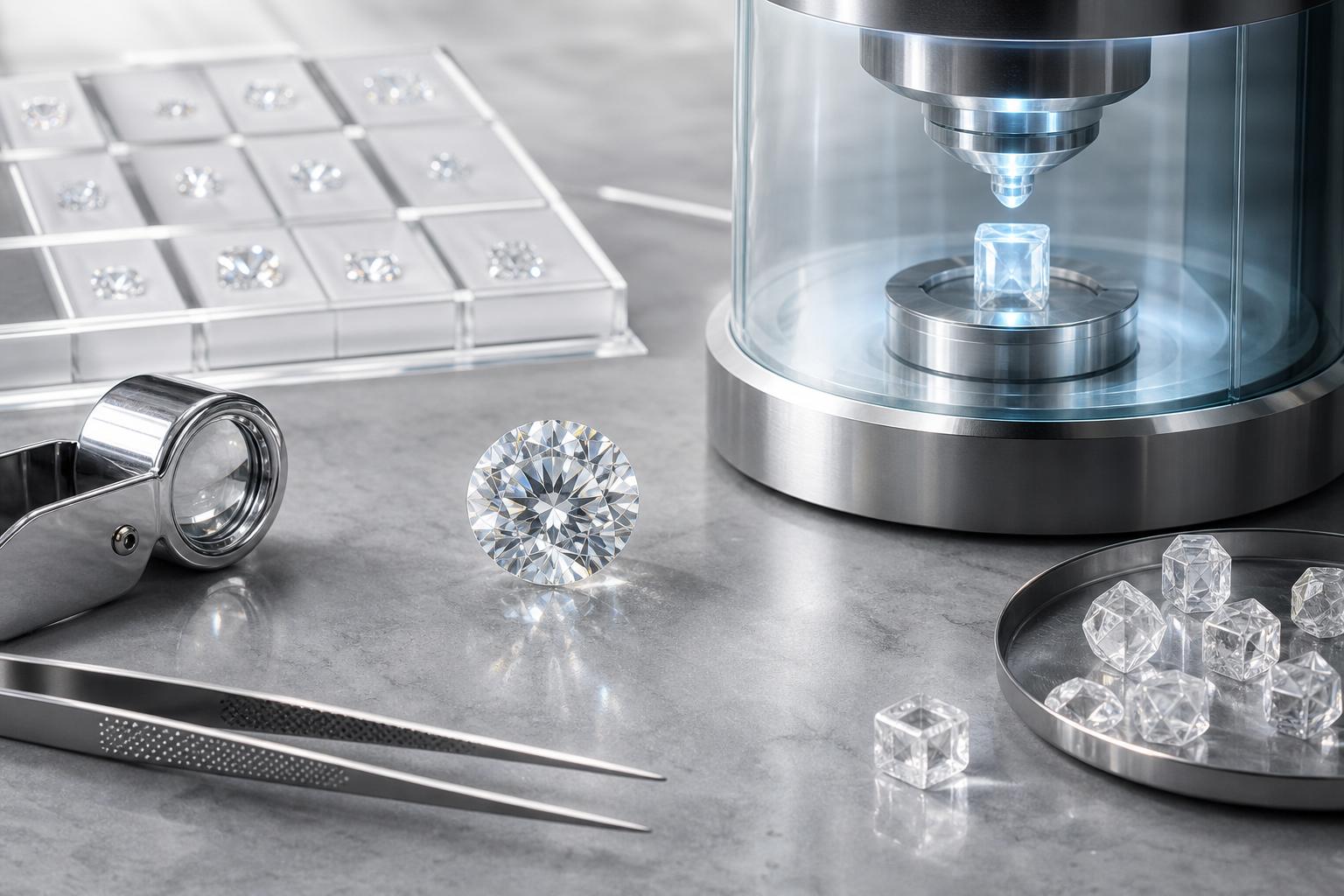
Lab-grown diamonds have moved from niche curiosity to serious luxury choice. They are real diamonds with the same optical, physical, and chemical properties as mined stones, but they are grown in highly controlled environments that replicate the conditions under which natural diamonds form.
For many clients, the appeal is clarity of origin paired with creative flexibility. A buyer can often select stronger size, color, or cut performance within the same budget, which opens more room for bold design or milestone upgrades.

How they are made
Most lab-grown diamonds are created through either high pressure high temperature or chemical vapor deposition methods. Both processes encourage carbon to crystallize into diamond structure. Once grown, the rough is cut and polished just like a mined stone.
How they compare to mined diamonds
From a wear and beauty perspective, both are durable enough for daily jewellery and both can be certified by respected laboratories. The main distinctions are origin story, price structure, and the emotional value a client places on rarity versus innovation.
| Factor | Lab-Grown | Mined |
|---|---|---|
| Origin | Grown in controlled conditions | Formed naturally underground |
| Optical properties | True diamond brilliance and fire | True diamond brilliance and fire |
| Budget flexibility | Often allows higher specifications | Often prioritizes rarity and provenance |
Why buyers are choosing them
Lab-grown diamonds work especially well for clients who care about visible quality, matching pairs for earrings, or larger center stones with refined proportions. They are also increasingly popular in anniversary jewellery, tennis bracelets, and fashion-forward diamond necklaces where scale and symmetry matter.
The most important takeaway is simple: evaluate the stone in front of you, not just the category it belongs to. A well-cut, beautifully balanced diamond will always communicate quality more clearly than a label alone.